
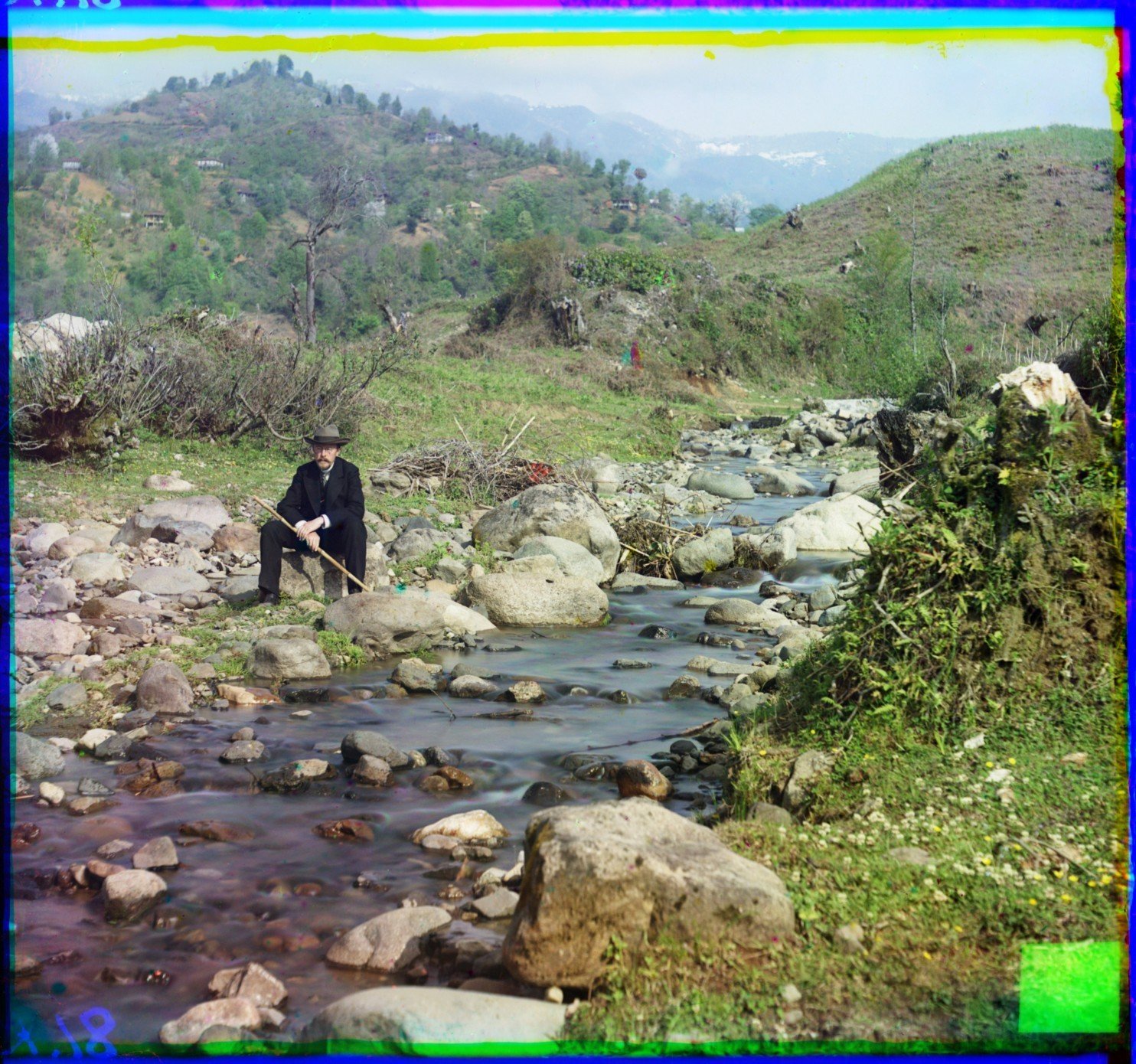
© Library of CongressSergei Mikhailovich Prokudin-Gorskii sidder ved breden af Karolitskhali Floden. (1912)
Selv om nogle af hans billeder går tilbage til 1905, fandt størstedelen af hans arbejde med at dokumentere det russiske imperium sted melle 1909 og 1915. Prokudin-Gorskiis farvebilleder blev optaget som "seperationsnegativer" på sorthvide glasplader. Kameraet, som han anvendte, gjorde brug af tre på hinanden følgende eksponeringer gennem blå, grøn og røde filtre. Han trykte disse negativer som positiver. Derefter indsatte han dem i en magisk lanterne for at projicere og lægge billederne [eng: frames] tilbage, oven på hinanden, gennem den samme kombination af filtre. Resultatet var en reproduktion af den oprindelige scene i fuld farve.
Kommentar: Delvist oversat af Sott.net fra In color: What Russia looked lige before 1917 Hele samlingen er tilgængelig hos Library of Congress som købte samlingen af Sergei Mikhailovich Prokudin-Gorskii sønner i 1948.
Billederne er fra før første verdenskrig: Hvordan en hemmelig elite styrtede menneskeheden ud i den første verdenskrig - en boganmeldelse
Det var før det armenske folkemord: 100 år efter: Det armenske folkemord i 1915 (VIDEO) Det var før den russiske revolution: Wall Street and the Bolshevik Revolution: Bankers and industrialists in the U.S., UK and Germany created, funded and maintained the Soviet Union Det var før Dagmar, Kejserinde af Rusland måtte flygte tilbage til Danmark. Det var før Stalins udrensninger: Israeli newspaper: We mustn't forget that some of the greatest murderers in modern times were Jewish, particularly those in Stalin's Russia Det var før 2. verdenskrig: "Operation Unthinkable", Churchills planlagte forræderi mod og invasion af Sovjetunionen, juli 1945 Hvordan mon Europa ser ud om 100 år?
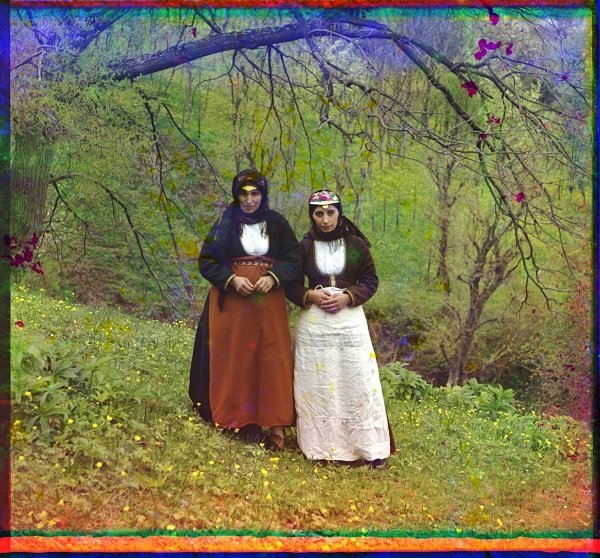
© Library of CongressCatholic Armenian women in customary dress. (between 1905 and 1915)
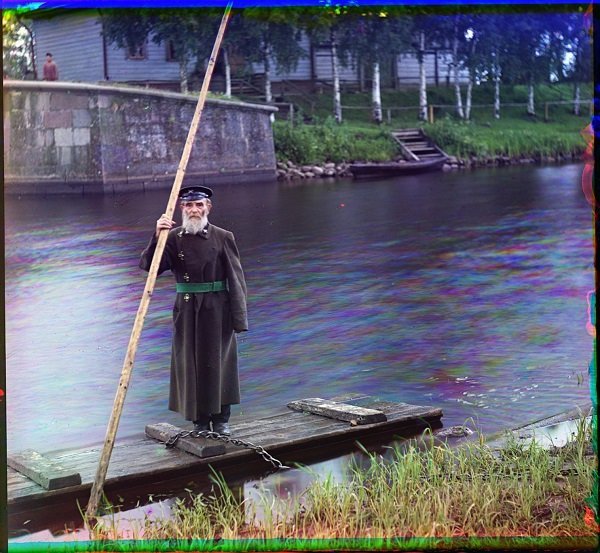
© Library of CongresPinkhus Karlinskii. 84, supervisor of the Chernigov floodgate, with 66 years of service. (1909)
In the composite image below, I used Adobe Photoshop to recreate the process of converting three black and white frames into a full color image.
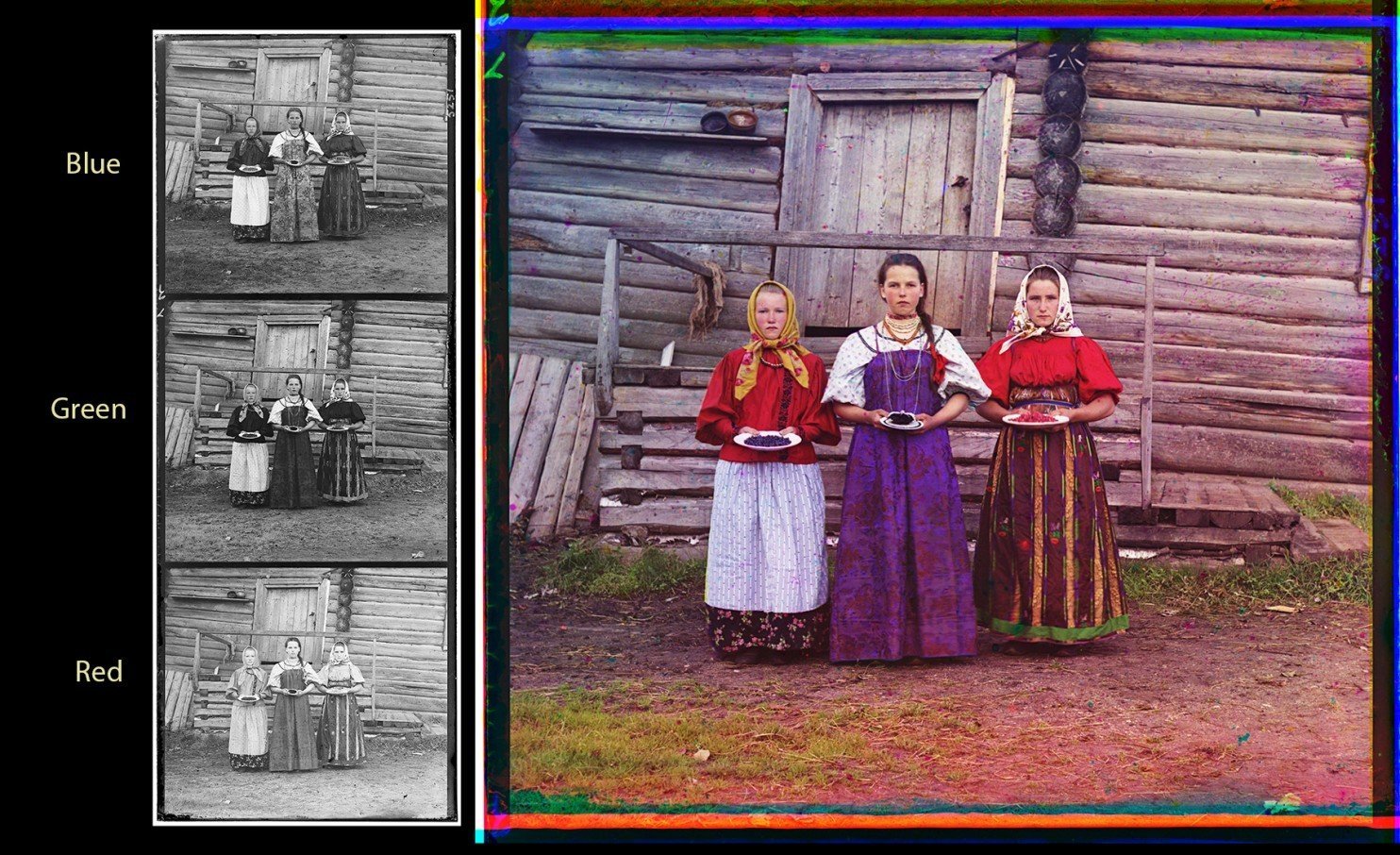
© Library of CongressThree young women offer berries to visitors to their izba, a traditional wooden house, in a rural area along the Sheksna River, near the town of Kirillov. (1909)
First, I created a blank RGB (red/green/blue) file in Photoshop that was the size and resolution of one of the individual frames. I then copied each of the frames into the corresponding color channel of the Photoshop file. A simple lining up of the channels resulted in the full color image on the right.
Ghosting in Prokudin-Gorskii's color images is caused by any misalignment between the successive exposures. Probable reasons for this are subject movement and/or movement of the negative plate between the exposures.
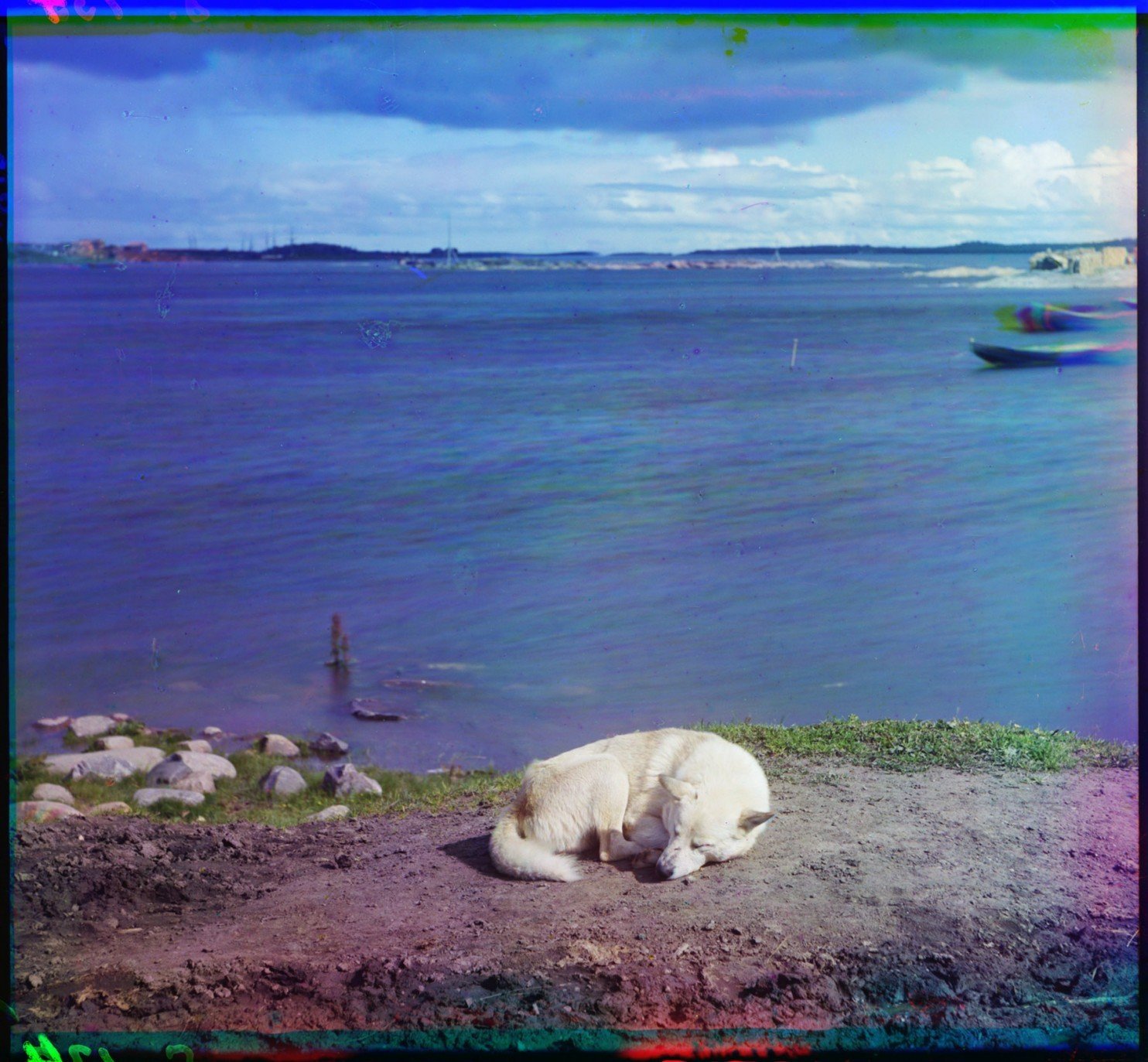
© Library of CongressStudies on Lindozero. The breed of dog is a Laika. (1915)
![Wooden Church of the Transfiguration of Our Lord. The village of Pidma. [Russian Empire] (1909)](/image/s15/315051/full/imrs_php.jpg "Klik for at forstørre")
© Library of CongressWooden Church of the Transfiguration of Our Lord. The village of Pidma. [Russian Empire] (1909)
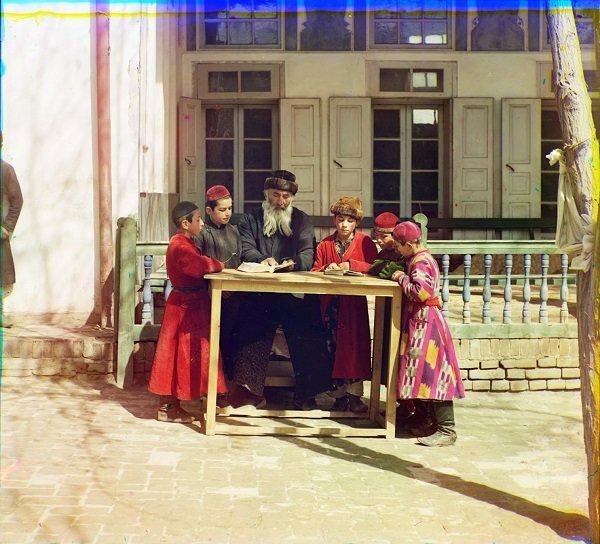
© Library of CongressJewish children with a teacher. Samarkand. (between 1905 and 1915)
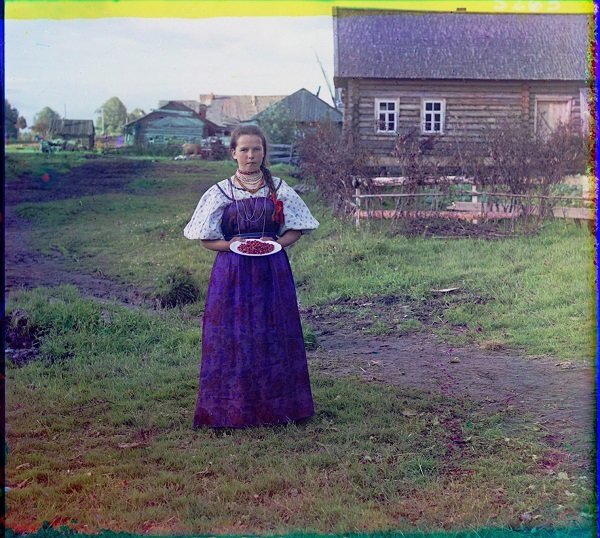
© Library of CongressGirl with strawberries. (1909)
![Armenian women in holiday attire. [Artvin] (between 1905 and 1915)](/image/s15/315055/full/imrs_php.jpg "Klik for at forstørre")
© Library of CongressArmenian women in holiday attire. [Artvin] (between 1905 and 1915)
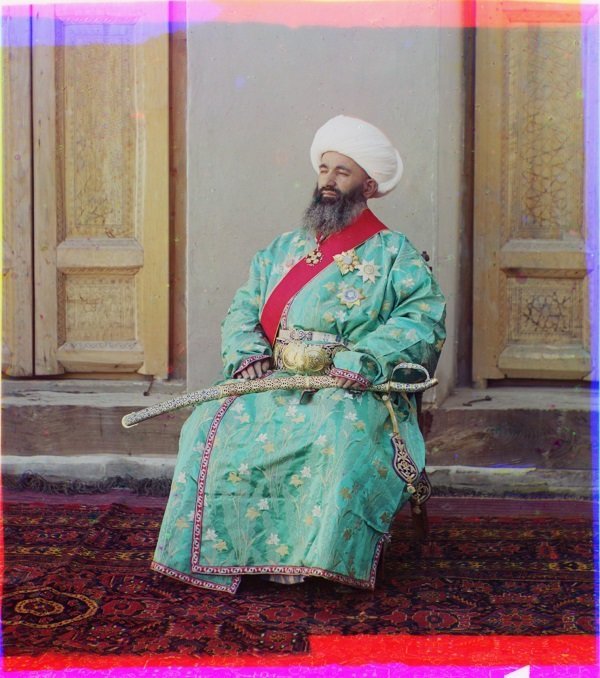
© Library of CongressKush-Beggi, Minister of the Interior, Bukhara. (between 1905 and 1915)
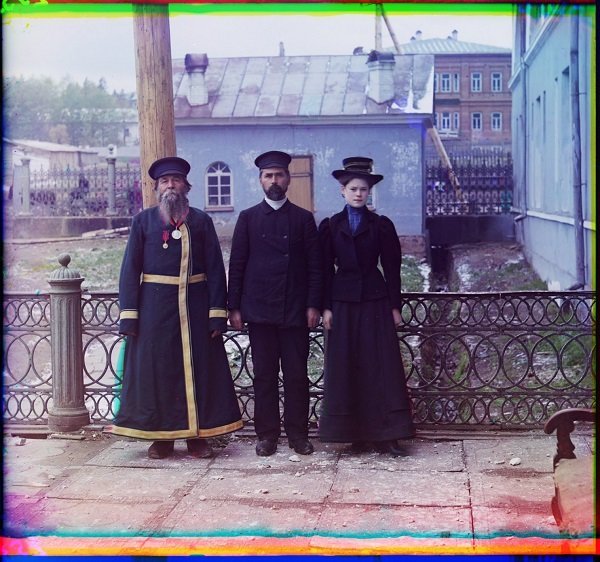
© Library of CongressThree generations. A.P. Kalganov with son and granddaughter, who work in the shops of the Zlatoust arms plant. (1910)
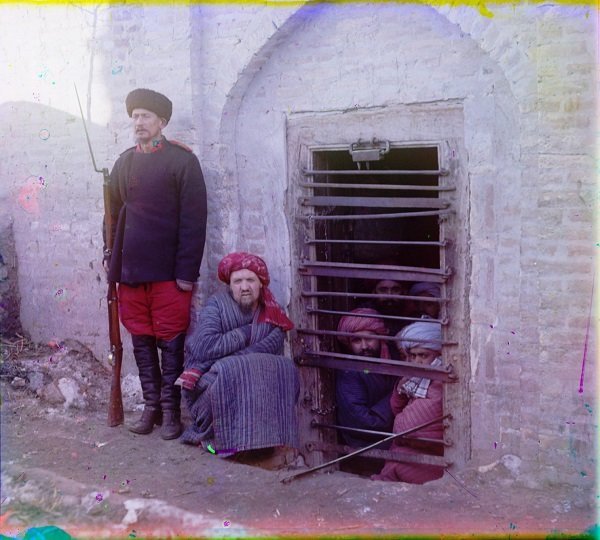
© Library of CongressZindan prison, with inmates looking out through the bars and a guard with Russian rifle, uniform, and boots, Central Asia. (between 1905 and 1915)
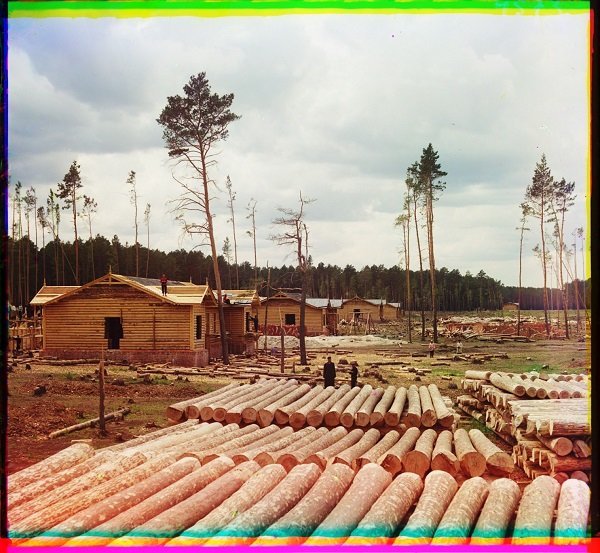
© Library of CongressRailroad construction on the Shadrinsk-Sinara railroad near the city of Shadrinsk. (1912)
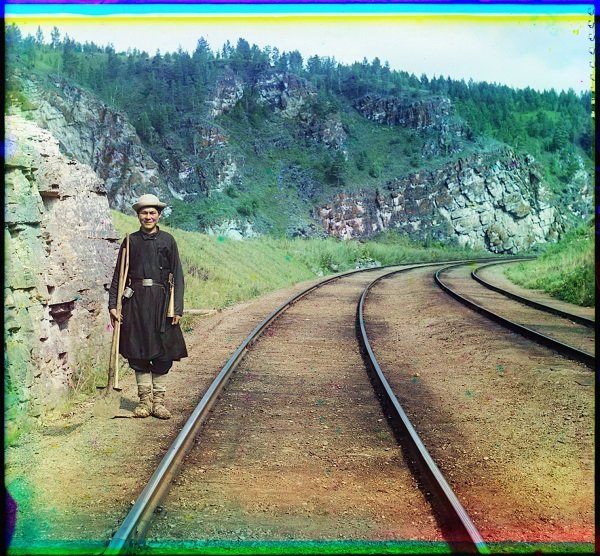
© Library of CongressA switch operator poses on the Trans-Siberian Railroad near the town of Ust Katav on the Yuryuzan River. (1910)
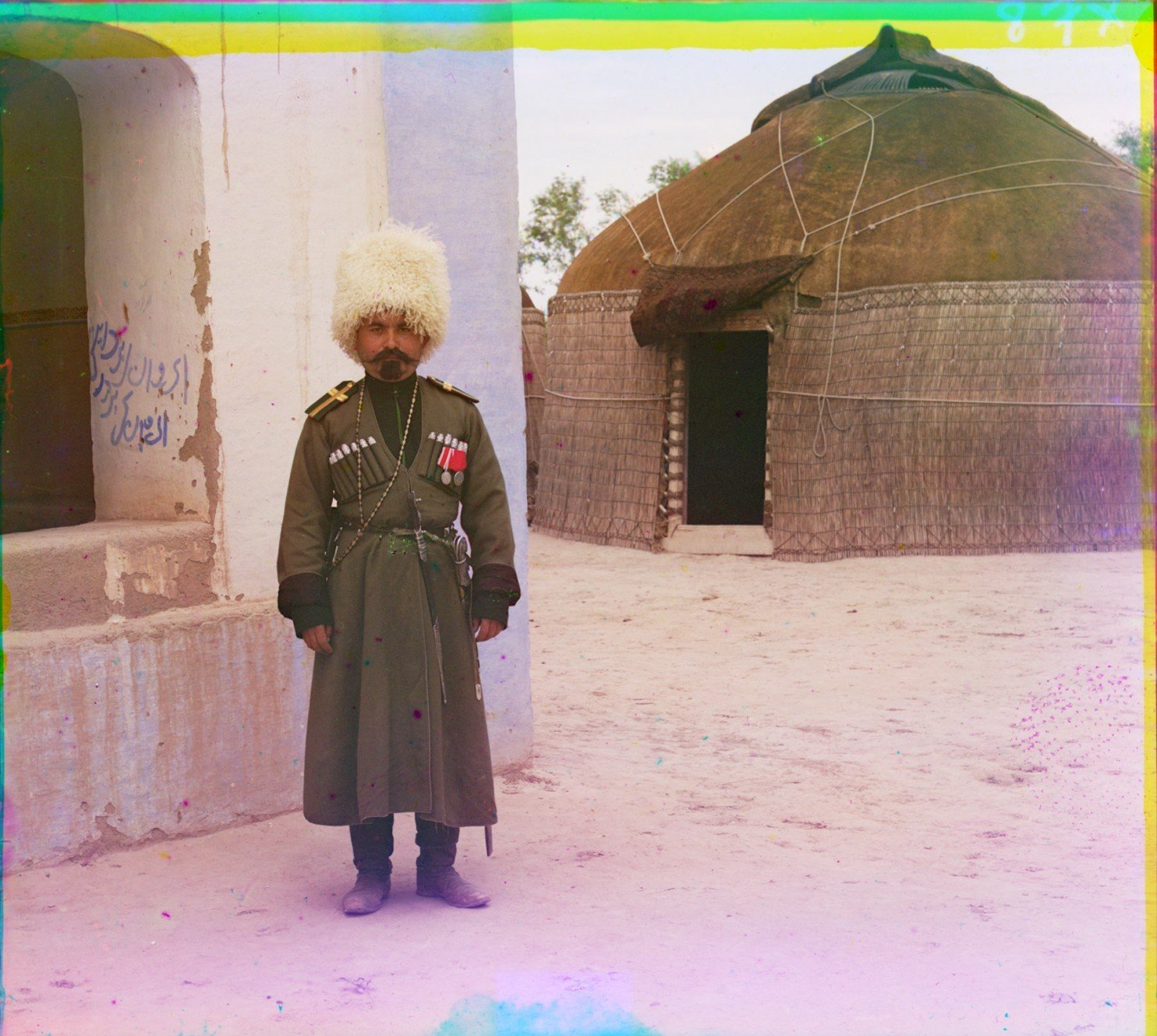
© Library of CongressMan in uniform beside building, yurt in background. (between 1905 and 1915)
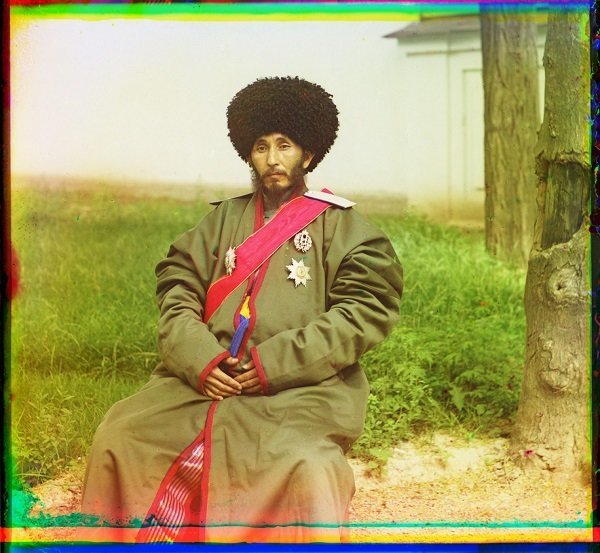
© Library of CongressIsfandiyar, Khan of the Russian protectorate of Khorezm (Khiva). (between 1910 and 1915)
The Sergei Mikhailovich Prokudin-Gorskii collection of the Library of Congress has 1,902 of these black and white glass triple-frame plates, as well as several thousand sepia toned and color prints.
Digital color composites for these images were made for the Library of Congress by Blaise Agüera y Arcas in 2004. Images are courtesy of the Library of Congress.
More information on Sergei Mikhailovich Prokudin-Gorskii, as well as a larger selection of his images can be found at the Library of Congress.

Kommentar: Helt fantastisk. Disse fotografier er sikkert nogle af de tidligste farvebilleder, der nogen sinde er taget/fremstillet. Billederne kan downloades i stort format fra Library of Congress.