

Med udbredelsen af sociale medie kanaler, kan kun få mennesker finde eller har tid til at grave for at finde kilden til information som de bliver fodret med via Facebook og Twitter feeds. Uden at vide det og imod deres vilje, så bliver de ofte ofre for fupnumre, propaganda, og disinformation maskeret som værende ægte nyheder.
Har du for eksempel, set det forfærdende billede af en lille pige som løber gennem en ødelagt gade i Aleppo som er fyldt med døde mennesker?
Der er blot det ved det at gaden ikke er fra Aleppo eller endog fra Syrien, men fra en musikvideo lavet af Hiba Tawaji, en libanesisk popsanger. Den var oprindeligt posted fra en Twitter konto med en klar politisk drejning, men er ikke det værste eksempel på anti-russisk og anti-Assad propaganda.
Kommentar:
Denne artikel er delvis oversat til dansk af sott.net fra: FakeCheck: RT separates real from fake news with special online project
Another piece of fake news which spread like wildfire in December, when the Washington Post, a respected newspaper that broke the Watergate scandal, published an article claiming that Russian hackers had breached the US power grid in Vermont.
The electricity company promptly issued a statement refuting the story and exposing it as a complete fabrication, but not before the hysteria was picked up and shared by many other outlets.
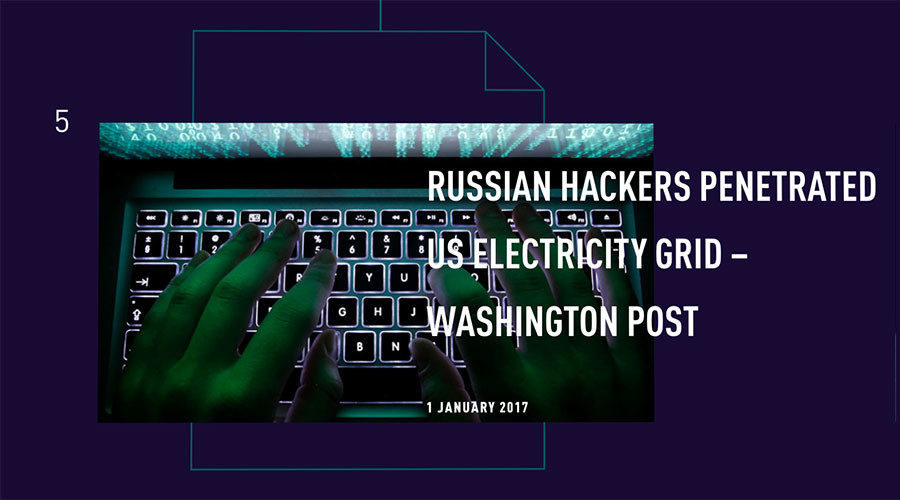
FakeCheck is an interactive, easy-to-use multimedia portal that breaks down popular news stories in an easily-digestible manner, covering both serious topics and viral hits.
In an interview to RNS news outlet, answering a question on whether it is impossible to fight the spread of unreliable information, RT's editor-in-chief Margarita Simonyan said: "Not exactly. We are taking action. In particular, we've launched the Fakecheck project. We will debunk fakes that are extensively distributed across the mainstream media."
"Someone - the Washington Post, for example - will write some complete nonsense, and then the whole world reprints it! Say, when the newspaper wrote about a hacking attack on a US electricity network, for which Russia was allegedly responsible. It was alleged that Russian hackers broke into the American power grid through a power company. One had been under the impression that the whole of America would plunge into darkness. Yet later, the energy company denied the information. It turned out that only one laptop of the company was infected, and it was not even connected to the general network.
"And yet, it all remains in the public mind as an actual fact, even if [...] a refutation was later issued. Therefore, we are launching this project so that such things are debunked. It is clear that there must be more such projects, of course,"Simonyan said.
"With today's overabundance of sources and prevalence of social media streams in news delivery, misinformation can spread like wildfire, with unverified reports, rumors, and outright falsehoods getting serious news treatment," RT's Deputy Head of News Andrey Kiyashko said in a press statement. "RT's new project helps you separate fact from fake."


Læserkommentarer
dig vores Nyhedsbrev