
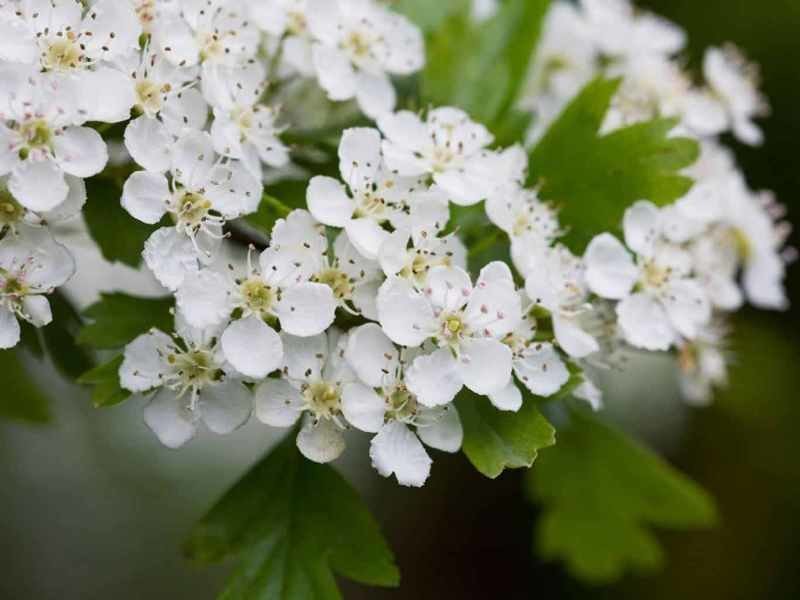
© AlamyHawthorn has been spotted in flower at New Year, a whole five months earlier than expected
Nature Studies: I en normal vinter ville en botaniker ikke forvente mere end 20 to 30 planter i blomst
Det er uhørt: efter den varmeste og vådeste December i bøgerne, var mere end 600 arter af britiske markblomster i blomst Nytårsdag 2016, har en stor undersøgelse vist.
I en normal kold vinter ville vi ikke forvente mere end 20 eller 30 typer af vilde planter at gå i blomst på de britiske øer ved årets udgang - arter såsom margueritter, mælkebøtter og hesteblad.
Men en undersøgelse begået a the Botanical Society of Britain and Ireland (BSBI) opdagede at den 1. Januar, var ikke færre end 612 arter faktisk i blomst, inklusiv arter der blomstrer i det sene forår og højsommer - en hændelse der synes at være uden forgangstilfælde, og har forbløffet planteforskere.
"Det er utroligt," sagde Kevin Walker, BSBI's Chefforsker. "Jeg har aldrig set noget lignende."
Ligesom Decembers utrolige vejrhændelser med rekord-nedbør og varme, er denne masse opblomstring udenfor sæson et tegn på et markant klimaskift. "Det er hvad der kunne forventes med klimaforandringer," sagde Dr Walker.
Kommentar: Vores klima, sæsoner og geologiske forhold er ikke hvad de har været, og det er selvfølgelig ikke CO2's, skyld. For en ikke-politisk/ videnskabelig uredelig afhandling læs: Anmeldelse: Earth Changes and the Human Cosmic Connection
Resten af artiklen: "It's bloomin' incredible" say botanists: More than 600 species of British flowers were in bloom on New Year's Day - usually it's 20-30 er ikke oversat til dansk.
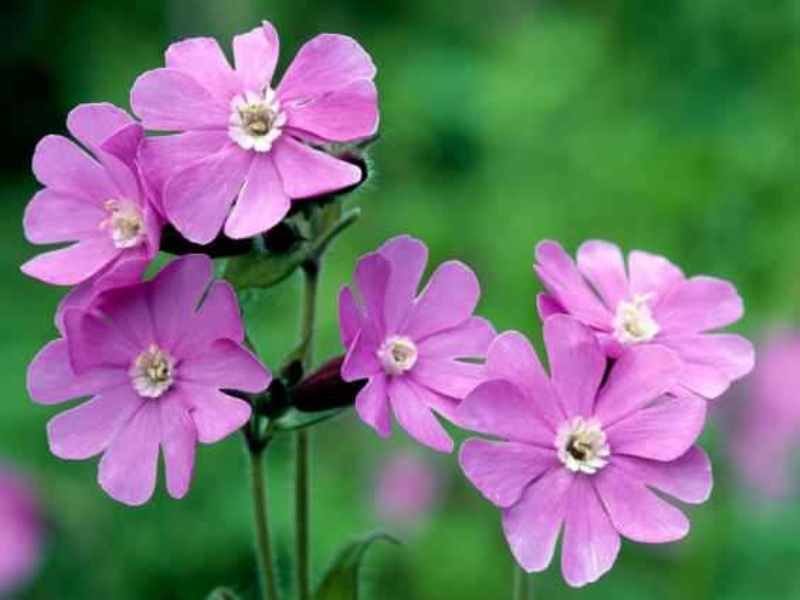
© AlamyRed campion (Silene dioica) was unusually in bloom on New Year’s Day, 2016
But most remarkable of all for Dr Walker was the discovery, in 17 locations, of hawthorn in bloom - which is known as the mayflower for its normal flowering month.
"I've been monitoring these things for at least the last 20 years, and I've never heard of hawthorn being seen in flower at New Year," he said. "I doubt if many botanists have ever seen it. I would be surprised if I saw hawthorn in March. What's the world coming to?"
The BSBI survey, known as the New Year Plant Hunt, was detailed and wide ranging. It involved 500 BSBI members and other wild flower enthusiasts who spent three hours on New Year's Day looking for species in bloom, all across Britain from the Hebrides to the Channel Islands.
Their efforts resulted in 400 lists (as some people worked in groups) containing 612 species in total; many lists had 60-70 species on them, with one recorder noting 100 species at Swanage in Dorset, while one of Britain's leading plant scientists, Professor Mick Crawley of Imperial College, recorded no fewer than 153 species in the London area.
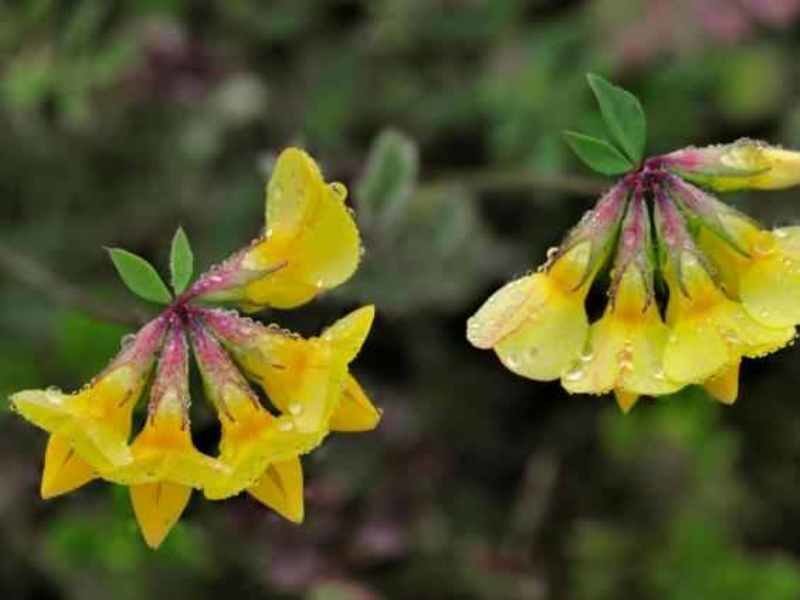
© AlamyHorseshoe vetch (Hippocrepis comosa) was one species flowering five months late
In the event, 1 January 2016 saw more than 20 times as many species in bloom. They can be divided, said Dr Walker, into early- and late-flowering examples - the late-flowering species being those which have straggled on since the summer, in the absence of the frosts which would normally have killed them off.
Roughly 75 per cent of the species found were regarded as late, about 20 per cent were early, and five per cent were on time.
Remarkable examples of later flowering species included the grass meadow fescue, which normally flowers in June and was thus six months late, and three species all five months late: pineapple weed, ivy broomrape and horseshoe vetch.
This last, an example of which was found in flower near Beer in South Devon, is particularly unusual, as it is associated with hot summer days on chalk downland, where it is the larval food plant of the chalkhill blue butterfly.
"What on earth is that doing flowering in the middle of the winter?" said Dr Walker. "It's just crazy."
The BSBI's New Year Plant Hunt is a piece of "citizen science" which is likely to expand and become a valuable tool for measuring environmental change, in the same way that the RSPB's Big Garden Birdwatch and Butterfly Conservation's Big Butterfly Count are already showing changes in their respective areas.


Læserkommentarer
dig vores Nyhedsbrev